
Onboarding lives in one person’s head.
Engagement letter, access, document list, setup. Rebuilt from memory every single time.
For owner-led accounting & bookkeeping firms
Hours vanish every week chasing documents, re-keying portal data into QuickBooks and answering “did you get my file?” I find the loop that is eating your week, fix it inside the tools you already pay for, and keep a human on every approval.
Four working sessions a month3 openings before January 1
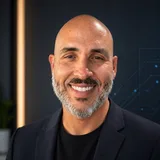 Antonio Urbina Jr., founder
Scattered requests → one owned route → a person approves → done.
Sound familiar?
It leaks out in the gaps between your tools, your people and your clients. Here is where it usually goes.
Engagement letter, access, document list, setup. Rebuilt from memory every single time.
Reminder emails written by hand and tracked in somebody’s inbox.
Status questions interrupt the exact billable work they are asking about.
Two systems, one human copy-paste bridge, and a typo waiting to happen.
Someone squints at bank lines and invoices until the numbers agree.
The software works. The space between the software is where the week disappears.
Swipe for more →
Your people aren’t the problem. The handoffs between them are.
Put a number on itWhy now
Firms putting AI to work on routine admin are buying back time every day. Firms waiting are competing for a shrinking pool of people to do it by hand.
a day that accounting professionals using AI report saving, per person. That is roughly 18 hours a month.
Karbon, State of AI in Accounting 2025 (self-reported)more time saved when the firm invests in AI training instead of leaving people to figure it out alone.
Karbon, State of AI in Accounting 2025drop in candidates sitting for the CPA exam from 2016 to 2021. Hiring your way out keeps getting harder.
Cited in Karbon, State of AI in Accounting 2025of tax firms are planning or considering generative AI. Only 21% say they are already using it.
Thomson Reuters, 2025 Generative AI in Professional ServicesSurvey figures from the sources linked. They describe the industry, not results promised to your firm.
Handoff cost calculator
Move the sliders. No email needed to see the number.
Owners, staff, contractors. Anyone who chases, re-keys or answers status questions.
Chasing documents, copying between systems, status emails, rework.
Pay plus taxes and overhead. Or what an hour of your own time is worth.
Estimated yearly cost of repeated handoffs
Illustrative estimate: people × hours × hourly cost × 48 working weeks. It uses only your inputs and is not a promised result. Want it by workflow? Take the 2-minute Handoff Check.
How it works
A build should get smaller as it gets clearer. Four steps, in your tools, with your people.
Pick the repeated handoff that keeps coming back. Start with the work people already do, not a software wish list.
Separate repetition from judgment and risk. Write down what can move, what must stop, and who decides.
Ship the smallest safe system inside your existing tools. Make exceptions visible before adding more machinery.
You keep the accounts, the docs and final control. My access is removed or limited at handoff. No hostage subscription.
AI agents, without the hype
ChatGPT agents, Claude Cowork, Copilot, Grok Bot, Meta’s Muse. I help you pick the one that fits, give it one job inside your tools, and keep a human on every approval.
See how I set up AI agentsPricing
No discovery-call runaround. Every option has a price on the page.

A build-with partnership. Four working sessions a month where we fix your handoffs together, inside your tools, so your team owns it and knows how to run it.
$2,000/mo for new clients from January 1, 2027. Current clients keep their rate.
Not ready for a monthly partnership? One 90-minute working session on the workflow that hurts most, and a written memo: build, simplify, or stop.
One-on-one over Zoom.

The lighter plan. Your private AI business coach: bring real work, leave with a decision and a next step.
Terms confirmed in writing before anything starts.
Want it built for you instead? An AI Systems Build starts at $4,500 for one defined outcome, scoped from a Review memo. Training a whole team? Organizational training is scoped to your people and tools.
See builds and training →Proof
 Official AI Partner
ReFrame needed attendee and sponsor commerce, contracts and controlled access to work as one system. Not five tools held together by an inbox.
“This has been more helpful than I can even express. … Really.”
“I just learned how to use the "Grill Me" prompt. Amazing 🔥 Immediately turned into insight which made us create a new system for taking action. Proves the point that we are only using 10% or its true capabilities. We havent even started yet 💪 Great work man.”
“Okay. I love it. I'm going to have a clean inbox here by the end of next Friday.”
“But….the website looks AWESOME online and I really appreciate it. … I sincerely appreciate the work you put into this. Very grateful, sir.”
“He's worked with a few members already in the community and has done really good, good and very fast. You're basically building the Reframe piece for us. And so that's really helpful.”
“What an amazing class we had today. I feel like I have such clarification now.”
“This would be perfect. Actually, I love this. This is what I would think would be awesome for when you're manually reviewing the POs.”
“You're living in the future, dude.”
“The community needs to know more about what you do!!”
“But now I know where to go. You are amazing. Thank you for being patient with me and for me being a beginner. And I appreciate you.”
“Se ve super bien. A mí me gusta. Me encanta.”
“It looks great. I like it. I love it.” (translated from Spanish)
“Gracias otra vez por toda la información y ayuda. Me abriste los ojos a muchas cosas que puedo hacer para crecer la compañía.”
“Thanks again for all the info and help. You opened my eyes to many things I can do to grow the company.” (translated from Spanish)
“I want to work with you, because I know that they trust you in the [REFRAME] people, and that's how I found you.”
“I'm loving this. This is so me.”
“I know I get excited at little things, but it's saving me time, energy.”
“For me, bro, what you've done already, just as a template or a rough thing, I think it's great. I think it works great, it flows great.”
“Oh, that's cool, Antonio. That's really nice because now we can kind of give you more detail of what we liked and didn't like.”
“hey sir! Thanks for today's session. Can I share your skills with a few peeps, or is it only for your clients?”
“Antonio, I'm loving this view for Admin > Partners.”
“Looking really great. Love the ideas”
“Hello Tony, looking good! looking good!”
“Oh, I love it. Okay. This is great. Oh my goodness. I'm so excited.”
“He provided clear, actionable advice that has already made a noticeable difference.”
“I especially appreciated his practical approach to AI and his ability to explain things without overwhelming me with technical jargon.”
“Antonio quickly assessed my challenges and provided clear, strategic solutions that not only improved my SEO performance but also streamlined key processes in my business.”
“He was easy to work with and his approach to getting results is unmatched. He delivers on what he promises.”
“Antonio has all the patience in the world to explain everything clearly and provide solutions to all your needs.”
Real people, unscripted. Session quotes are transcribed word for word from recorded client sessions; messages are quoted as sent on Slack or by email. Reviews link to Google.
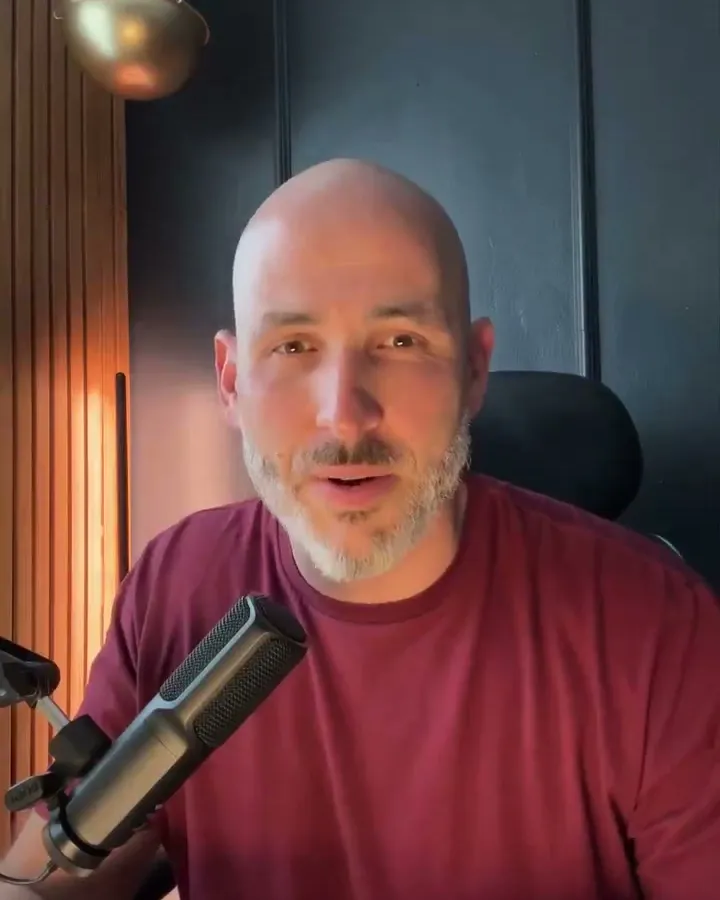
Meet your builder
I’m Antonio Urbina Jr. I spent 20+ years integrating enterprise systems. When ChatGPT arrived I saw how fast mom-and-pop firms could get left behind, so I brought that experience to the owner-led firms without a tech department.
Straight answers
Because a free call is a sales pitch and you deserve a working session. The AI Opportunity Review is 90 minutes of real diagnosis on your actual workflow, and you leave with a written memo you keep whether or not you ever hire me. If you want to check fit first, send me the workflow in writing and I will reply personally.
A build-with partnership. Four private 60-minute working sessions a month where we fix your handoffs together, inside the tools you already pay for, plus brief Slack support between sessions. Your team learns to run what we build, and your firm owns it. It is $1,750 a month, month-to-month. For new clients it moves to $2,000 a month on January 1, 2027; current clients keep their rate.
Then the memo says so. Every Review ends with a build, simplify, or stop recommendation. Sometimes the right fix is a better checklist or a setting you already pay for, and that is a good outcome.
No. I start with what you already use: TaxDome, Karbon, QuickBooks Online, Gmail or Outlook, Excel. Any new tool needs a reason, a scope, and your approval.
Work happens in firm-controlled accounts under your information rules. Exceptions and final approvals stay with your team, and my access is removed or limited to agreed support at handoff.
Yes. I help firms pick the right agent (ChatGPT agents, Claude Cowork, Copilot, Gemini and others), give it one job inside the tools they already use, and keep a person on every approval. See how AI agent setup works.
Owner-led accounting, bookkeeping and tax firms, usually 2 to 25 people. Other owner-led professional-services firms with the same handoff problem are welcome.
Your tools. Your people. Your keys.
We fix it together in four working sessions a month, and your team owns what we build. Want a decision first? The 90-minute Review gives you one in writing.
3 openings before January 1$2,000/mo for new clients from January 1, 2027. Current clients keep their rate.